Family trips are supposed to be fun. But for parents and carers, that excitement can come with a nagging worry about keeping children safe in a new environment, so it’s a common concern.
The real challenge is teaching children how to be aware of their surroundings without making them scared, which is a tricky balance to strike, especially for looked-after children who might already be struggling with anxiety.
The goal isn’t to paint the world as a scary place. It’s about giving kids practical tools so they feel confident and ready for adventure.
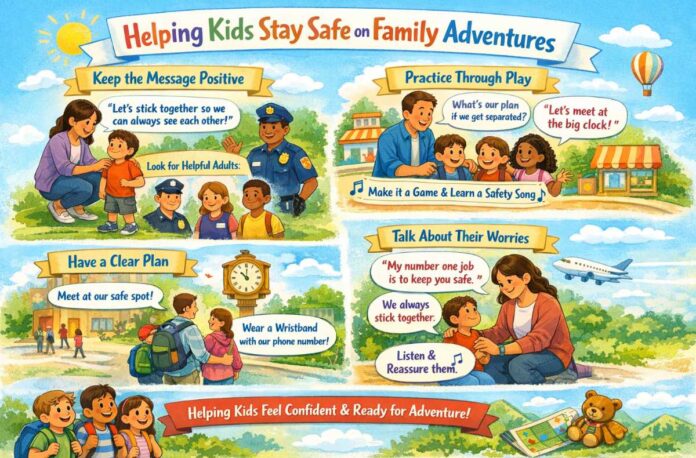
Keep the Message Positive
It’s all about how you frame it. Telling a child “Don’t run off” is much less effective than saying something like, “Let’s stick together so we can always see each other,” which turns a rule into a team effort. This applies to the old “stranger danger” lesson too, since that concept can be pretty confusing for a child.
A much better strategy is to teach them how to identify helpful adults in different situations, such as a police officer, a store employee wearing a uniform, or even another parent with their own kids. This gives them a clear, positive action to take, rather than a vague fear of everyone they don’t know.
Practice Through Play
Kids learn best through play, so turning safety lessons into a game makes them stick. A parent’s phone number, for instance, can become a little song they can’t forget, which is much easier to recall if they’re feeling stressed. Before you even leave, you can do some light-hearted role-playing.
Just ask, “Okay, what’s our plan if you can’t find me in the supermarket?” and then walk through the steps together. Practicing this in a familiar place builds genuine confidence, so a scary ‘what if’ scenario becomes a simple problem they know how to solve, not a lecture to sit through.
Have a Clear Plan and a Safe Spot
Kids feel less anxious when they know what to expect, so having a simple plan can be a huge comfort for everyone involved. Before heading into a busy place like an airport or a theme park, decide on a strategy together. You could pick a really obvious meeting spot, i.e., “the big clock” or “the main entrance,” just in case you get separated.
For younger kids, a wristband with a phone number on it is a great backup. When you call it the ‘family adventure plan,’ it feels like a shared mission, giving a child a sense of control over the situation instead of making them worry.
Talk About Their Specific Worries
It’s important to remember that some children have deeper fears about being lost. This is especially true for children fostered with agencies like Fosterplus. They will have experienced instability, and the fear of being left behind can be very real for them. These conversations need a lot of patience. You have to create a space where they feel safe enough to talk about their worries without feeling like they’re being dismissed.
Listen to what they’re saying and offer calm reassurance. Simple phrases, repeated often, can work wonders, such as, “My number one job is to keep you safe, and we will always stick together.” Over time, this builds a powerful foundation of trust and security.
This isn’t about scaring children; it’s about making them feel competent. By using positive language, practicing through play, and having sensitive talks about their real worries, adults can equip kids with the skills they need. This approach helps them navigate new places with confidence, so they can see the world as a place of adventure, not a place to be feared.