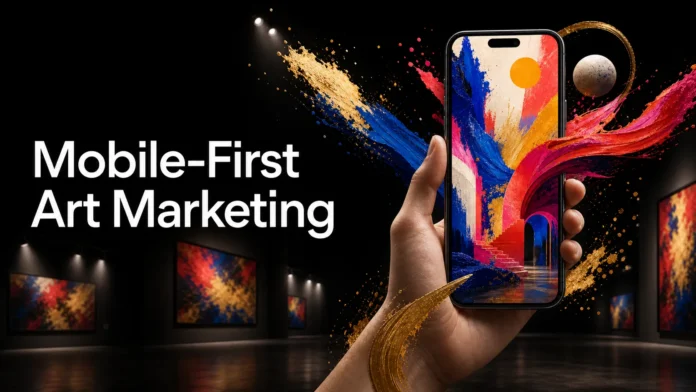
For independent visual artists, mobile-first attention is becoming inseparable from art promotion. Collectors may first encounter an artist’s paintings on Instagram, discover a photography portfolio on a mobile site, quickly skim through an exhibition announcement on the bus, or receive an e-mail about a new collection.
Gallery owners, art consultants, and commission clients may research the artist on their phones before a meeting or show. So the artist must make thoughtful use of the attention that is already being given without overwhelming the visitor.
A mobile-first approach is good, so long as it steers users through a simple experience to a place where they feel comfortable, rather than chasing likes or clicks. The most efficient tactic is to have a well-defined funnel for each promotion – from portfolio traffic to gallery visits, exhibition inquiries, or mailing-list sign-ups.
Start With the Experience After the Click
Before promoting anything on mobile, artists should evaluate what a visitor sees after clicking on a link. A viewer who clicked through an exhibition announcement should not have to find dates or locations on a homepage. A potential commission client should not have to enlarge small text or navigate complex menus to find out about the process. A mobile-friendly art site will give the visitor what they need: another page, a clean portfolio, or a call to action.
For painters or illustrators, this often means preparing a separate page for the new collection, so large images would not have to be opened on a narrow screen. Photographers may want to consider the mobile-first design of their galleries, making the image size or orientation less critical. Sculptors and installation artists benefit from having multiple shots on a page to communicate scale, medium, and other factors. Mixed-media artists should describe their process clearly enough for a mobile user to understand what they see. Promotion cannot compensate for a poor first impression: if the exhibition page or portfolio is inaccessible, users will not come back.
Present Artwork for a Smaller Screen
The work itself rarely considers the mobile-first experience, but its promotion has to. Large-scale photos, intricate drawings, and multimedia displays may be daunting on a smartphone, but the artist can provide multiple options on a landing page. A full-size image communicates the work’s composition, but a close-up shows text on canvas, the weft of a tapestry, or the pores on a subject’s skin. A shot of the studio helps estimate the size of a piece, while a short clip captures the motion in a kinetic sculpture. This is not about modifying the art, but rather providing the context for the mobile viewer to experience it.
The same goes for text: longer descriptions may be difficult to read on a narrow screen, so the artist should keep the most important details separate from the image or video. An exhibition’s name, date, and venue should be easy to see, while the history of its creation can be found in a caption or on the portfolio’s landing page. Prior to publishing, every promotion asset should be opened on a phone, checking that the art is recognizable, any text is readable, and the most critical detail is in view without extra scrolling.
Give Every Campaign One Clear Purpose
Mobile campaigns are often overwhelmed with the desire to tell everything at once. An announcement may mention a new show, available prints, commission options, a workshop, and an e-mail subscription in a single Facebook post, confusing the visitor. Every promotion should have a single call to action, simplifying the decision for the visitor interested in taking the next step.
For a gallery exhibition, this may involve driving traffic to the event page or the venue itself. An announcement for the new collection may prioritize portfolio views or inquiries. An open studio may prompt RSVPs to the event page, rather than asking the visitor to follow the artist. The artist selling prints may drive traffic to the prepared landing page for the collection, rather than a general e-commerce page. The call-to-action buttons on these posts may vary from “View collection” to “Sign up to the mailing list” or “Inquire about available work,” but they must lead the visitor somewhere specific.
Having one purpose also determines the value of each campaign. Likes, comments, shares, and views count, but they are only a beginning. An artist who promotes an open studio should prioritize the RSVP sign-ups, as well as visits to the directions section on the event page. The same artist promoting a new set of commissioned portraits may count the completed inquiries to gauge the demand for their work. The more specific the metric, the more useful it is to the artist: engagement with the link or button indicates a level of visitor interest that cannot be ignored.
Build Direct Relationships Alongside Social Posts
While social media posts are a powerful tool in an artist’s mobile-first marketing, they must serve to drive other traffic. An e-mail list is a good place to start, collecting the audiences of various platforms in one place. It allows the artist to update collectors, gallery owners, and consultants directly and consistently, without being distracted by the noise of the social feeds. The mailing list can promote a new collection, exhibition, studio visits, and the availability of prints or original works.
The visitors should know why they subscribed and what they will receive in return. If the artist asks gallery representatives and collectors to follow updates about a new collection, the message should state what those updates consist of: “I will notify my mailing list about the new collection’s release date.” Simply saying “Subscribe to my newsletter” provides no information about the benefits and expectations. The segments within the list can be organized manually, so regular collectors receive news about the available prints while those who subscribe to workshops receive updates about the openings.
Direct communication is good, but it must be used sparingly. The artist should update the mailing list on their own schedule, avoiding the temptation to spam it just to remain visible. In every message, the visitor should feel like they have received something valuable. The announcement of a studio visit is a good opportunity to share a few thoughts from the artist, rather than simply asking to RSVP without context. If the artist wants to promote a new gallery exhibition, they should provide the event details on a separate landing page, rather than reproducing the social post in the e-mail. The visitor needs to know where to go next, so the artist should consider the audience’s needs alongside their own marketing goals.
Test the Paid Promotion Options
If the artist’s promotions have a specific CTA and audience, they can consider investing in the paid options. These should be reserved for an existing body of work, a portfolio, or an exhibition with a set destination, rather than the vague intention to promote art. An exhibition, the launch of the online portfolio, the participation in the art fair, and the availability of prints can all benefit from a well-targeted paid mobile campaign.
The artist should test the options with a specific audience, a clear CTA, and a projected budget in mind. When researching the options, they may come across push ads in android or other digital promotions considered useful for art marketing. Push notifications are one such option, allowing the artist to provide the visitor with a helpful reminder or a compelling CTA. However, the targeting options, budget, permission to send, and the visitor experience after clicking must be scrutinized before adopting one such option. A push ad about a sculptor’s open studio would need to provide directions, hours of operation, and the images of the work available to view. A photography exhibition launch would need an accessible page listing the prints, their sizes and descriptions, and the pricing options. Before spending more on the ad, the artist should ensure that a visitor who clicks on the notification would not be disappointed by the experience. A paid campaign is still an experiment: with audience, CTA, and budget defined, its value is measured in the actions the user takes after clicking.
Match the Message to the Visitor’s Expectations
Likewise, the best mobile promotions recognize the timing and environment in which the visitor sees the post. An exhibition announcement can be made weeks ahead of the opening, as well as on the day itself, reminding the visitor of their intentions. But constant notifications about an event or a body of work will turn off the audience, regardless of the promotion’s value. The artist should balance between the reminder and the annoyance, so a new collection always receives more context than a last-minute reminder about the open studio.
The location is a consideration, as well: a reminder about the art fair opening is wasted on the users who have no means of getting there, unless the online viewing option is mentioned. An exhibition announcement always includes the address, the dates, and the hours, but it also designates the necessary preparations for the visitor. If the artist promotes a local gallery show, the visitor should know whether they can travel there. If the artist promotes an art fair, the visitor should understand the practical details for attending.
The artist should remember that a mobile visitor has a split-second to engage with the message. A casual scroll through the visual content may pause at a single line describing a new collection, while the user looking for a studio visit will engage more actively with a detailed CTA. The artist should always prioritize the intent of the user: visiting an exhibition, signing up to the mailing list, inquiring about the original paintings, or requesting a portrait commission are very different actions.
Be Brief, But Say Something Worth Reading
Mobile marketing favors brevity, but it does not abandon substance. In fact, a well-written short description follows the same principles as long-form writing: it provides the visitor with the message, the reason to visit, and a convenient CTA.
A mobile post or ad could say: “New coastal photographs exploring the winter light are now available to view online.”
It could say: “Come to the open studio on Saturday and see the new ceramic series.”
Or it could say: “Portrait commissions are now available for a limited time this season.”
Every message tells the visitor what to expect, without overstating the case. It informs the audience, rather than demanding their response. This allows the promoter to meet the visitor’s expectations, rather than trying to create urgency. The artist should avoid such phrases as “do not miss out on my best work ever!” or “limited time only,” unless the collector has the specific reason to believe in this claim. Promoting an art career always requires honesty: a mobile ad should reflect the same values as the artist’s work and behavior. The image should support the text, and the text should explain the image. The CTA should lead the visitor somewhere specific, rather than overwhelming them with choices.
Coordinate Different Promotion Channels
A mobile campaign can use multiple promotion channels, so long as they complement each other rather than repeating the same message. The artist should use the same idea but deliver it differently in social posts, e-mails, website banners, or paid ads. A mobile social post can share the best image of the new collection, while the website’s landing page presents the whole body of work. The e-mail to the mailing list can describe the process behind the pieces, while the exhibition announcement gives the visitor the practical details of visiting the gallery. A paid ad can target a specific audience with a helpful CTA and an image that makes the user stop and read.
In every promotion, the artist should present the visitor with an interesting idea or thought, rather than repeating the same text. A mixed-media artist preparing for the art fair can announce the event on social media, send a preview e-mail to the mailing list, post a full guide to the fair on the website, and spend a small amount of money on an ad targeting those who express interest in local events. This allows the artist to build a consistent message while reaching out to different audiences who may not overlap.
Measure the Outcomes That Matter Most in Art Marketing
At this point, the artist should track what matters most: the engagement, the visits to the portfolio or online collection, the sign-ups to the mailing list, and the exhibition visitors. Likes, shares, and follows are good, but they do not build an art career. Real outcomes are the ones that drive the artist toward their professional goals. They could include a traffic increase to the portfolio, the number of visitors who expressed interest in the new collection, the sign-ups for the open studio, the e-mail inquiries about the original works, the number of sales, and opportunities to engage collectors.
Each artist defines these outcomes based on their own goals: a photographer promoting an online portfolio would benefit from measuring the traffic to the individual projects, while the painter announcing the available original works would track the inquiry-form submissions. The illustrator would use the metrics to measure the engagement: if the visitor viewed the process before contacting the promoter, it would indicate a serious level of interest. Likewise, the artist should consider these outcomes valuable: ten engaged visitors are better than a hundred superficial ones.
Respect the Audience’s Choices
Every visitor interacts with the art promotion in real-time, shaping the artist’s reputation based on a combination of factors. Detailed descriptions, accurate image captions, reasonable pricing if applicable, and the exhibition guidelines build a positive perception, while unclear language, unsolicited mailing-list messages, irrelevant notifications, and desperate CTAs drive the audience away. An art marketer always remembers to let the visitor make their choice, rather than convincing them that they need something right now.
The mobile promotions always include a CTA, but they do not pressure the visitor to make a choice immediately. An exhibition announcement informs the audience, rather than insisting that they must RSVP before Friday. The artist should follow-up to engage the visitor in the process. The same goes for the email-marketing campaign: the opt-out option should always be in plain sight and easy to use. The artist should not send additional information to the visitors who have declined the studio visit or ignored multiple social-promotion attempts. Frequency is key to maintaining professional integrity: if the collector signs up to the mailing list, they should receive regular, substantive messages. If the art-fair visitor subscribes to the local events only, there is no reason to notify them about the gallery show.
Promote Art, Not Yourself
Artistic integrity is a crucial consideration for any visual artist trying to market their work. The mobile marketing techniques always prioritize the collector experience, providing them with the information, value, and convenience needed to visit the website, see the work, and inquire about availability. If the artist makes unsupported claims about their own work, it may alienate the visitor, who has to make sense of the unsubstantiated claims. The promoter should always remember that the message should speak for the art and the business, rather than focus on their personality. Honest language benefits the artist: a mobile ad can say “My landscape paintings” instead of “These beautiful scenic views created by me,” but it should also be prepared to answer the questions the visitor may have. It is always worth providing the context for the work, remembering that no image speaks for itself.
Create an Easily Repeatable Marketing Process
The visual artist is now equipped with an effective way to promote their work. The mobile marketing does not require the independent promoter to jump from channel to channel, chasing likes and shares. They have defined their objective and prepared the mobile-friendly destination, presenting their work or exhibition in a way that is easy to consume on a phone. They have engaged their audience, reminding the visitor without overwhelming them and delivering the information they want to receive. And they analyzed the outcomes, measuring the metrics that truly matter in their art marketing.
Now, the artist should devise a repeatable system that serves their business well. It always starts with the clear objective, the mobile-friendly landing page, the promotional asset, and the delivery channel. The artist can apply these principles to their next promotion campaign, the upcoming exhibition, the announcement of their open studio, or the introduction of their new collection. They should remember that mobile attention is fleeting, but it can be earned by a thoughtful professional with a well-defined message.